
In this article, I would like to give you 9+1 reasons why forest photography could also be an ideal hobby for you. So if you have been looking for a new hobby for a while, then be sure to read on!
- Forest photography? What is it anyway?
- Number 1: You have a reason to get out into nature regularly
- Number 2: There are only minor barriers to entry
- Number 3: Forest photography slows down
- Number 4: You're doing something for your health
- Number 5: Forests are easily accessible almost everywhere
- Number 6: Forest photography is a year-round hobby
- Number 7: You can live out your creativity
- Number 8: You take home a result
- Number 9: Forest photography deepens your connection to nature
- Number 9+1: The most important reason - your own reason
Forest photography? What is it anyway?
… you may be asking yourself now. Therefore, as an introduction, a few words about what is behind the term.
Forest photography is – as the name suggests – photography in the forest. This makes forest photography a special area of nature and landscape photography.
Forest photography is about exploring the forest habitat with the camera and capturing scenes and motifs from the forest photographically.
This is not always easy, after all, there is hardly any habitat where there is as much "hustle and bustle" as in the forest.
On the other hand, forest photography offers many, many advantages. Which ones exactly, that's what we're talking about in the following.
Here are my 10+1 reasons why forest photography could be your ideal hobby:
Number 1: You have a reason to get out into nature regularly
It's easy to resolve to spend more time in nature. But actually doing that, on the other hand, can sometimes be much more difficult.
All too quickly, everyday life, the weather or even just one's own comfort get in the way and make the implementation of good intentions a small or major challenge.
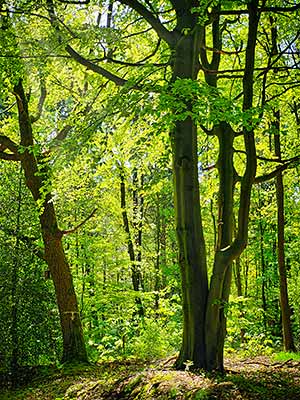
Forest photography gives you an incentive and a purpose to go outside.
You don't just go into the forest (which is always a great idea, of course), but you go into the forest to do something concrete.
And something that is fun and that you look forward to.
This makes it much easier not only to decide to go out into nature, but to actually do it.
And: Forest photography motivates you to really go out in any weather - the most beautiful shots are often taken when the sun is not shining all day!
Number 2: There are only minor barriers to entry
Unlike other hobbies, you don't need anything for forest photography – at least in the beginning – that you don't already have at home anyway.
Sensible clothing, proper shoes and a camera. That's pretty much it. And most likely, you already have all of these things at home.
Start with your smartphone
To get started with forest photography, you don't need an expensive camera. Nowadays, most of us have a smartphone and the built-in cameras are often very powerful and deliver good results – often even in difficult lighting conditions.
Many (in fact, almost all) cameras even offer different lenses for wide-angle and telephoto shots.
And macro shots are also no problem for most modern mobile phones.
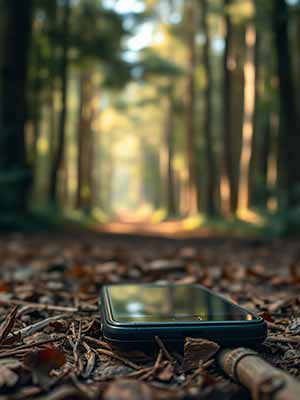
For some mobile phones, there are even special screw-on lenses with which you can further expand your photographic possibilities with the mobile phone.
Of course, the image quality of such screw-on lenses and smartphones in general cannot be compared to that of more professional cameras.
But it's enough for the beginning.
Don't you think so? I took all the pictures for this article (except for the picture on the left or above with the mobile phone on the forest floor) with my smartphone, an LG ThinQ G8. It's already a few years old and was never famous for its outstanding camera qualities.
Gradually expand the equipment if necessary
If forest photography actually becomes your hobby, you can always invest in better equipment later.
Then you might want to buy a compact or even a system camera.
Later, you might add a tripod and different lenses to expand your options.
But remember, you don't have to buy everything at once.
Take your time, learn the basics of forest photography, and then invest in the equipment you really need and that meets your needs.
Number 3: Forest photography slows down
Forest photography is a wonderful way to wind down and escape the stress of everyday life.
When you are out and about in the forest, you automatically become calmer and more relaxed. The energy of the forest and the tranquility that the trees radiate rub off on you.
This will automatically make you calmer and more relaxed.
You come to rest - and that also in the literal sense. Because in the forest you can leave the noise of civilization behind you and also find purely acoustic peace.
The only thing that can be heard in the forest are natural sounds, especially the singing of birds. And it even has an additional calming effect – Studies confirmed.
But you can also come to rest visually in the forest. The play of sunlight in the canopy of leaves also has a calming effect and is said to activate areas of the brain that are normally active during meditation.
In Japan – the country of origin of forest bathing (Shinrin-yoku) – there is even a word for it: Komorebi .
All this contributes to the fact that every stay in the forest that you use for forest photography becomes a short vacation for body, mind and soul.
Number 4: You're doing something for your health
If you go out regularly, you are actively doing something for your health. Forest photography can therefore also be an ideal hobby for you from this point of view.
And this on several levels:
Physical health
The mere fact that you walk through the forest during forest photography and are so active contributes to the fact that you are doing something for your health.
In addition:
The paths in a forest are often uneven and bumpy, smaller paths are also partly interspersed with roots or plants grow into the path that you have to avoid when walking.
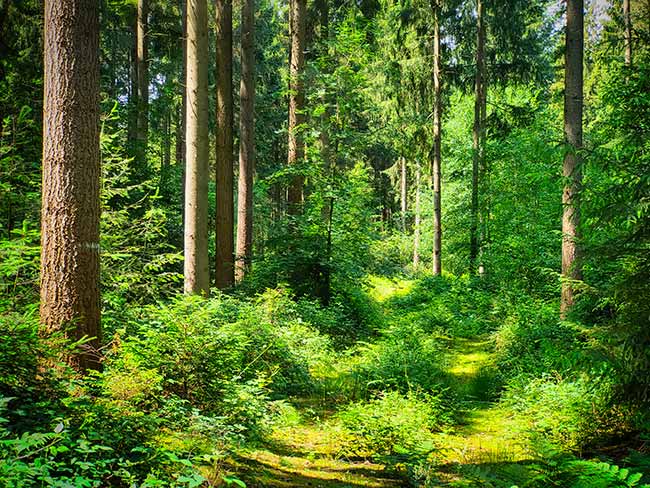
Walking in such terrain is also not yet a high-performance sport, but sometimes quite demanding - and further raises your activity level, which also benefits your health.
And if you leave the paths completely (please inquire beforehand whether this is allowed in "your" piece of forest), you may even walk over soft moss cushions and train your sense of balance at the same time.
Especially with increasing age, such balance training is invaluable, as it helps to move more safely and avoid falls.
In all this, of course, your own safety is always the highest priority.
Therefore, always adapt your "path selection" to your abilities and also pay attention to the typical dangers that also exist in the forest: dead branches that can fall, storm damage, roots that you could trip over and others.
With a little common sense, however, all this should not be a problem, so that you can move safely in the forest.
In addition to the increased activity, the forest and forest photography have other health-promoting benefits to offer.
I'm talking about the "healing trio of the forest", as the forest bathing coach Jörg Meier calls it. Two of the three factors of this healing trio play an important role in health prophylaxis (we'll get to the third factor in a moment).
Forest air is healthy
The first of the three pillars: the oxygen anions in the forest air. Anions are negatively charged atoms – in this case, negatively charged oxygen atoms.
And there is a lot of it in the forest air.
If these negatively charged oxygen atoms from the forest air come into contact with the fine cilia of your bronchi when inhaling, they release part of their charge there.
As a result, the cilia straighten up and can thus fulfil their filter function for the air we breathe much better.
In the forest, you breathe in particularly pure air in two respects.
On the one hand, because your bronchi can filter the air particularly well when inhaling with the help of oxygen anions. On the other hand, however, because the leaves of the trees already filter the air, so that forest air is usually of particularly good quality.
Both together ensure that fresh forest air is a true health elixir. In addition, forest air is generally rich in oxygen because the plants produce it in large quantities during the day.
By the way: The oxygen anions mentioned above are formed mainly in humid air and light rain, when the moisture in the air beads over the leaves of the trees.
Reason enough, then, to go out into nature even in seemingly "bad" weather!
The beneficial effects of phytoncides and terpenes
However, plants do not only produce oxygen. In recent years, the so-called phytoncides and terpenes have increasingly come into the focus of research.
Phytoncides – a special group of substances within terpenes – have antibiotic or antimicrobial effects and are released into the air by trees primarily to ward off fungi.
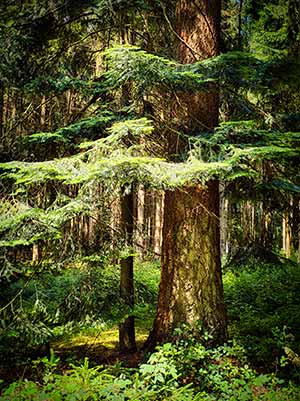
The interesting thing about this is that phytoncides not only protect trees from fungal infestation. At the same time, they have a positive influence on the human organism.
In To try it was shown that phytoncides could not only reduce the concentration of stress hormones in the body, but that the activity and number of so-called NK killer cells – important building blocks of the immune system in cancer defense – also increased.
The group of terpenes (sometimes called terpenoids) – the supergroup of phytoncides, so to speak – comprises over 8000 different substances that are emitted by trees and that play an important role in the communication between trees.
Did you know that trees warn each other of predators, such as insects? Of course, the trees don't shout warnings to each other – they use the terpenes that they release into the air in large quantities during an "insect attack".
Terpenes are one of the main components of forest aerosols – and they also have a positive effect on our health!
For example, newer Research on animals anti-inflammatory, immune-boosting, nerve-protective, and even anti-cancer effects of terpenes.
However, these positive effects of terpenes on health have not only been known for today. Humans have been using terpenes in the form of essential plant oils for thousands of years.
You are probably familiar with essential plant oils such as mountain pine oil, which is often used for infusion in the sauna, or peppermint oil, which is said to have a stimulating effect on the organism.
The Aromatherapy uses the many positive effects of terpenes on the human organism.
And you can do it too – automatically every time you're out and about in the forest while taking forest photography!
Forest photography strengthens your mental health
Of course, mental health is also closely linked to physical health. Because what did the ancient Romans say? "Mens sana in corpore sano" – a healthy mind in a healthy body.
And this is where the third factor of the "healing trio of forests" comes into play – the so-called microbial fog.
What is that?
The forest floor is alive, and not a little! A handful of forest soil contains up to 40,000 different species of bacteria.
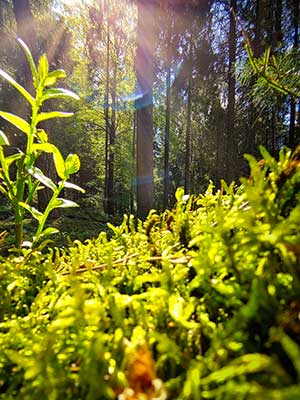
And many of them also have a positive effect on our health!
Because, contrary to what the advertising for disinfectants would have us believe, bacteria are not always bad for us.
In fact, only very few bacterial species have a pathogenic effect.
On the contrary:
Many bacteria not only have a positive effect on our health, but are even essential for the functioning of our organism (such as the bacterial flora in our intestines).
And many of these "good" bacteria live in the forest floor – including the Mycobacterium vaccae, which has been the best studied by researchers and has been proven to have many positive effects on our health.
Among other things, it was possible to Experiments on mice It has been shown that this bacterium releases substances that have an antidepressant and mood-lifting effect.
A positive effect on the cognitive functions of the brain (the performance of the brain) could also be in trials can be proven.
And: An American company keeps a Patent on the use of Mycobacterium vaccae for the treatment of chronic fatigue syndrome.
Luckily, you'll get all of these positive effects completely free of charge if you spend some time in the forest regularly and (maybe) pursue 😀 your new hobby of forest photography.
Number 5: Forests are easily accessible almost everywhere
Almost everywhere you have the opportunity to reach a forest relatively easily and easily. And often you don't even know what great opportunities there are right on your own doorstep.
I moved relatively often with my dog Jacky. And sometimes I lived in one place for a year or two before I discovered (often thanks to Jacky) completely new and beautiful pieces of forest that I had never seen before.
Hiking apps can be helpful in this context, in which other users can leave reviews for tours they have taken. Even so, I have already found beautiful paths and forest sections that are wonderfully suitable for forest photography.
By the way, I myself use Komoot , an app that I highly recommend to you.
But even if you live in the city, there is bound to be a small or larger park somewhere nearby. And many city parks have sections that give at least a little bit of the feeling of standing in a forest.
This is not a "real" forest, but you can also take great pictures there and experience many of the already mentioned advantages of forest photography.
Especially in such parks, there are sometimes particularly old and impressive trees – often ginko or sehills – that you can "explore" photographically. So you can create fascinating forest photos even in the middle of the city.
In many cities, the Tiny Forest movement is also increasingly becoming the focus of urban planners.
Tini Forests are small mini-forests that are intended to make cities greener and more climate-resistant. And they are also suitable for forest photography in the city.
In Germany, too, there are already Tiny Forests in some cities. Others are at least planning to create such a mini-grove in the foreseeable future.
You can find an overview of Tiny Forests in German cities here .
Photographing forests is therefore possible almost everywhere, at least here in Germany. Unlike many other hobbies, you don't have to drive miles to pursue the hobby of forest photography.
Number 6: Forest photography is a year-round hobby
Unlike many other hobbies, such as skiing, cycling or canoeing, forest photography is a hobby that you can do all year round. Because every season in the forest has its own charm and offers unique motifs and lighting moods.
In spring, it is the contrast between the flowering plants on the forest floor and the still bare trees that makes great photos possible. Later, the first, fresh green of the trees immerses the forest in a very special atmosphere.
Summer then again offers its own motifs. Then it is above all the play of light in the canopy of the trees and the play of light and shadow on the ground that provide plenty of photo motifs in the forest.
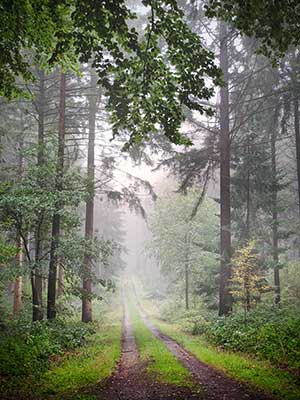
Later in autumn, when the leaves change colour, you will find your own light moods and motifs in the forest. The "Golden Autumn" is even famous for its great photo opportunities. But even in the thick autumn fog, you can take impressive shots.
Finally, winter comes and immerses the forest in a dark, mystical atmosphere. The bare trees and the gloomy atmosphere, in turn, offer their own opportunities for touching and profound photos.
So you can visit the same place in different seasons and discover something new every time. The possibilities are endless and offer endless inspiration for photography in the forest.
And that makes forest photography an ideal year-round hobby.
Number 7: You can live out your creativity
Being creative and expressing one's own creativity are basic needs of us humans. There is hardly a child who does not like to paint. While playing, children are always thinking up new games. And singing and making music are also among the favorite activities of most children.
Unfortunately, as adults, we often forget that being creative is an important need of ours and even contributes to our mental health.
Forest photography offers a fantastic opportunity to bring this back into focus and to live out your own creativity.
And that's another reason why forest photography could be an ideal hobby for you.
Motif search and image composition
The forest offers an endless number of motifs, from the colourful forest flowers in spring to the green canopies of leaves in summer and the golden light of autumn to the mystical mist moods in winter.
The search for the perfect motif is a creative process in itself.
You look at the environment with an artistic eye, pay attention to light, colors and shapes and think about how best to arrange all these elements in your picture.
You decide which framing you want to choose, which camera settings you use, and maybe even whether you use a telephoto lens or a wide-angle lens to capture your vision.
In each of these steps, your creativity is expressed. And in the end, you've created something that didn't exist before.
And that's exactly what creativity means: creating something new.
But the creative process doesn't stop there.
Image editing as a creative tool
Because image editing on the computer also opens up a wide field of creative possibilities for you.
You can highlight certain areas of the image, adjust the colors, and add your personal touch.
You can change the framing, soften or sharpen the image a little in some places, or darken areas of the image and brighten others to give them more meaning.
Through image editing, you can further refine your photos and implement your creative ideas.
I really enjoy image editing on the computer. And by the way, the post-processing of nature photos even lowers the stress level, because just looking at nature pictures relaxes and calms the nervous system.
And:
You don't even need a computer. There are a number of apps that allow you to edit your images directly on your phone.
My recommendation: Check out the app " Snapseed " from Google. It offers very comprehensive and at the same time easy-to-use options for carrying out even sophisticated image editing (tip: be sure to try out the "Ambience" filter when fine-tuning!).
If you prefer to edit your pictures on the computer, I can recommend the program Luminar Neo by Skylum.
I use the program myself very intensively and am always surprised at what is possible with Luminar in creative image editing.
Showcase and share your work
But the creative process doesn't end even after you've edited your images. Because your forest photos don't have to and shouldn't sour on your hard drive.
Nowadays, there are many ways to make more of your own pictures and to present your photos and share them with others.
And you can get really creative there too!
For example, you can create wall calendars or art prints and give them to your friends.
Or you can design photo books with your forest photos, which you can give away or look at yourself to remember your experiences on site in the forest again and again.
All these possibilities are further stages in the creative process with which you can not only live out your creativity, but maybe even inspire other people and make their day a little more beautiful.
Number 8: You take home a result
Creating something new, such as the pictures on a photo tour through the forest, is not only very fulfilling because it allows you to live out your creativity.
At the end of the day, being able to see concretely what you have achieved can be a very nice experience in itself. Many craftsmen find their work very satisfying for precisely this reason.
And this is exactly what applies to forest photography.
The mere fact that you have a concrete result of your work in the form of pictures in your hands at the end of the day makes forest photography a very fulfilling hobby.
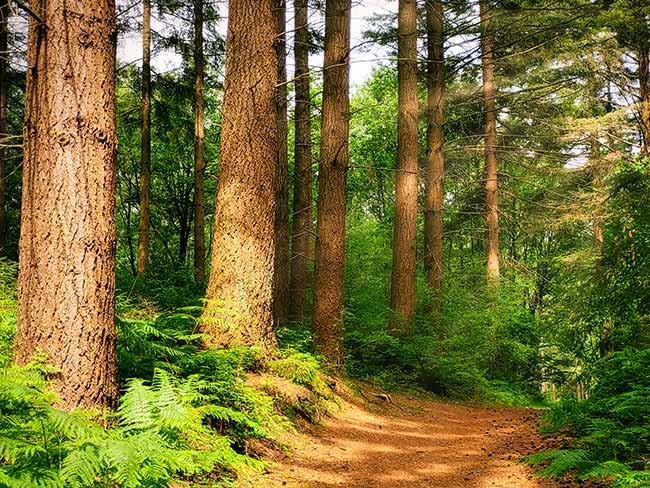
In addition, you can look at your photos again later at home and always remember the experiences associated with these pictures.
Your pictures are more than just pictures.
You remember the place, the weather, and your feelings and thoughts at that moment. All these memories are stored in your memory and are activated when you look at your pictures.
In NLP – neurolinguistic programming – we speak of so-called anchors. The pictures anchor your experiences in the forest and thus get a very personal touch.
And as already mentioned, looking at images of nature also lowers stress levels and the concentration of stress hormones in the blood at the same time – an effect that is further enhanced when the images viewed are a personal reminder of beautiful hours in the forest.
Number 9: Forest photography deepens your connection to nature
The number 9 is also the most important reason why I love forest photography so much:
Forest photography reconnects you with nature.
And in a very concrete way, not just as a philosophical concept. When I'm out in the forest, I smell the air in the forest. I feel the elements on my skin and I feel in tune with the life around me again.
I can hardly imagine anything better than roaming through the forest like this and feeling the connection to the earth with every step -- even in our mostly rather unnatural forest forests.
Nature is simply good for you. And with forest photography, you can feel it every time you pursue your hobby.
And there's something else: forest photography is a mindfulness practice.
Forest photography as a mindfulness exercise
Mindfulness means being in the here and now with all your senses, being present and consciously perceiving the present moment.
And if you're out and about in the forest and looking for the perfect motifs, you'll practice it automatically. You are completely in the here and now, perceive your surroundings with all your senses and are open to what surrounds you.
The search for the right motif, the right composition, the play with light and shadow - all this requires your full attention and directs your thoughts to the moment.
You are completely in the here and now and let go of all other thoughts.
You can even combine photography in the forest with different mindfulness techniques, for example, if you have to walk part of the way to your next "photo spot".
Then you could do a "walking meditation", a walking meditation, or the technique " Focus Word ", which I describe in the Daily Flow exercises.
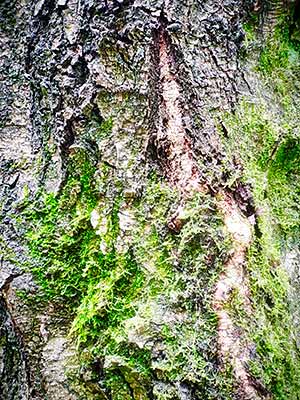
Or you try to take a photo of something you can't see in the woods. You could try taking a picture of the wind in the trees. Or a photo of the idea that life always finds a way.
In this way, forest photography becomes a mindfulness exercise and helps you to leave your everyday life and worries behind and concentrate entirely on the beauty of nature around you.
When I'm out and about in the forest (or in nature in general) with my camera, I forget everything else and am completely focused on nature and photography.
This helps me a lot to leave the stress of everyday life behind me for a while and to come back from my photo trips with fresh energy.
Connectedness through knowledge
But mindfulness is not the only thing that connects you more deeply with nature in forest photography.
Because if you regularly photograph in nature, sooner or later you want to learn more about the animals and plants you are photographing.
What kind of camera are you? How do the different animals behave in different situations? Why are certain plants only in certain places?
The more you deal with forest photography, the more you will develop a need to find answers to these and similar questions.
You'll become curious about the plant and animal species you'll discover, and you might even use apps to identify plants or animals. This factual knowledge strengthens your connection to nature and enables a kind of intuitive communication with your surroundings.
The author Serge Kahili King, who Huna Philosophy in the West, explains this in one of his books using the example of a "master mechanic" who knows his engines inside out.
His extensive knowledge of the functioning and technology of engines enables him to intuitively develop a feeling for the cause of a malfunction.
Intuition and knowledge go hand in hand – intuition is strengthened by your knowledge. The more you learn about nature and its secrets, the stronger your intuition becomes and the deeper your connection to nature becomes.
Number 9+1: The most important reason – your own reason
Let's get to the last and most important reason why forest photography could become your ideal hobby.
Why is this number 9+1 and not number 10?
Simply because this last reason is your own, very personal reason why forest photography could be your ideal hobby.
If you actually start going into the forest with your camera more often, you will eventually discover your WHY. Your reason why the forest and forest photography are important to you.
And if you have found it, then I would be very happy to hear this why from you.
Feel free to write me a comment!