
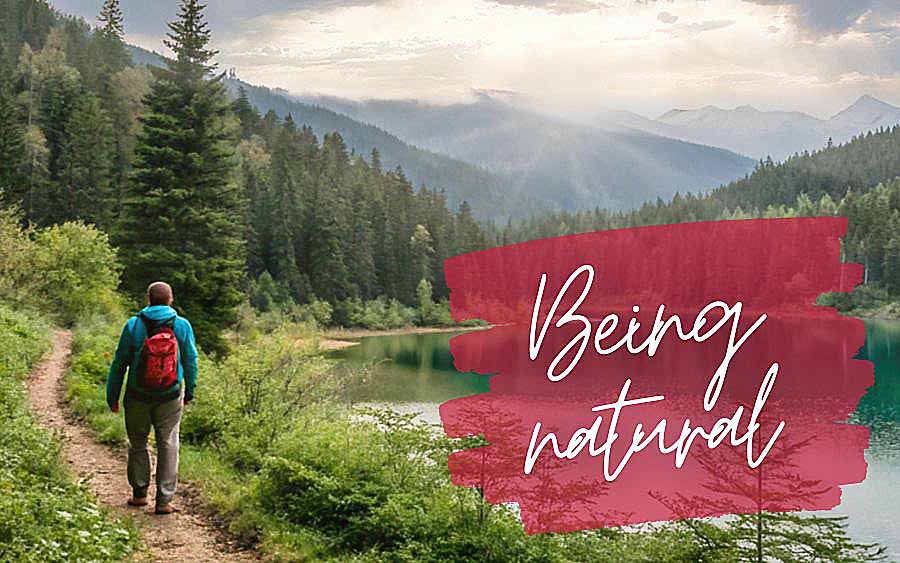
Since the Corona crisis, the world seems to have changed completely. Everything has become somehow more complicated, more hectic, faster - but above all, somehow more uncertain.
Things that could be relied on in the past no longer seem so safe today.
Whether it's one's own job, financial security, food supply, a warm roof over one's head, and since the outbreak of the war in Ukraine, even the confidence to live in peace in one's own country - all of this is no longer as self-evident as it once was.
And things don't look any better for the current year 2025.
The world is undergoing extreme change and we don't know what it looks like on the other side.
One might get the idea that there are far more pressing problems than caring about one's connection and connection to nature.
But why exactly this might be a good idea after all and can be a very important thing, especially in the current situation, is what this article is about.
Nature is the source of life
All indigenous cultures absolutely agree on one view: they consider nature to be the source of life.
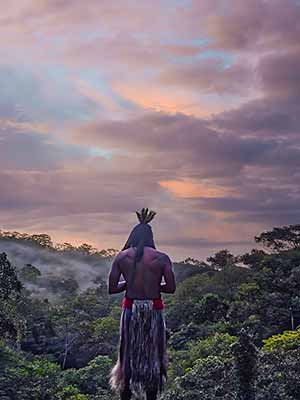
Nature is therefore sacred to them.
Actually, the knowledge about nature as the source of life and the resulting sacredness of nature is also deeply anchored in religions.
For example, the Dalai Lama, the head of Tibetan Buddhism, says:
"The Earth is not only our common heritage, it is also the source of life."
Even in Christianity, which is rather known for its "subdue the earth" doctrine, the sanctity of nature actually plays (or played) an important role.
Job 12:7-10 says:
“But ask the animals and they will teach you, the birds of the heavens, and they will tell you; or speak to the earth and it will teach you, and the fish of the sea will explain to you. Who among all these is not aware that the hand of the LORD has done this? In his hand is the life of every creature and the breath of all mankind.—Job 12:7-10
In today's world, however, we have largely forgotten this sacredness of nature and regard nature more as a supplier of resources that we can use and exploit at will.
In doing so, we have disconnected ourselves from nature and creation. And that's why we have forgotten that we ourselves are also a part of nature.
We are a part of nature
The theory of evolution teaches us that we humans and today's apes can be traced back to a common ancestor.
Did you know that (depending on the examination method) up to 99% of our DNA (the genetic material in our cells) is identical to that of chimpanzees?
So we are a part of nature purely from our origin.
But we are also a part of nature because we are integrated into the "web of life". Everything that happens in this network ultimately affects us too.
An example:
Just today, as I'm writing this section, I saw a video from a well-known nutrition coach about eating fish.
In the video, the coach pointed out the many health benefits of regular consumption of fish, but at the same time warned against eating larger fish species (predatory fish) too often.
Why?
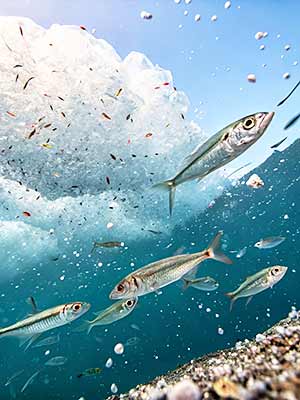
Because microplastics can now be detected in every corner of the earth, including all the world's oceans.
And this microplastic, along with other toxins introduced into the environment by us humans, accumulates at the top of the food chain - i.e., in predatory fish.
Here it becomes clear that "everything is connected to everything" is not a contemplative New Age saying, but hard reality (you can also find out more about this in in this article here on Flowfeather).
And we are also part of this "big picture" - which we unfortunately also seem to have forgotten all too often.
Our body is nature
In a video with Eckart Tolle, which deals with the connection to nature as a spiritual practice, Eckart Tolle explores the question of what one can do when one has no nature around oneself.
For example, if you live in a larger city.
His answer is simple:
You always have your body. And your body is also nature. If you don't have nature around you, you can always "reflect" on your body - perceive it with your senses.
This can be done through conscious breathing, a body scan (a technique from mindfulness) or through movement (tai chi, yoga, but also sports in general and any other form of movement).
Our body is the part of nature that is closest to us. Reconnecting with your own body therefore also strengthens your connection to nature.
But the whole thing also works the other way around:
Anyone who connects with nature automatically feels more connected to their body and to their own self - their own nature.
In nature, we come back into contact with ourselves. And that's an important thing, especially in this day and age, when we seem to be manipulated by everything and everyone.
To connect with nature is to connect with oneself
You can somehow notice it in the people who are so connected to themselves. They radiate an inner strength and calmness that enables them to deal calmly even with difficult situations.
Think, for example, of the mountain farmers or the mountain guides in the Alps.
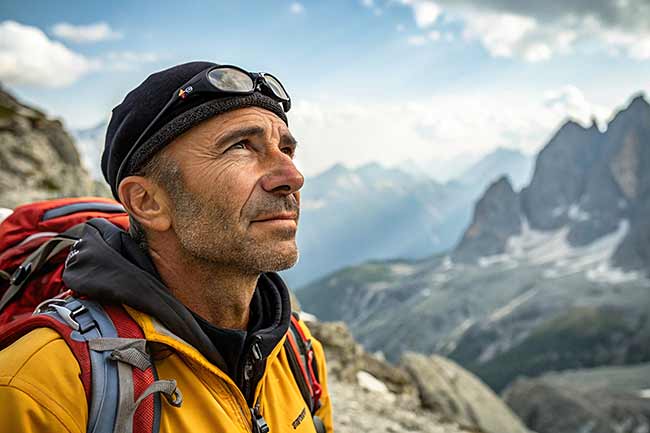
These are people who are closely connected to nature and spend almost every day outside. And you can usually see it in them.
Of course, the same applies to all other people who are regularly out and about in nature.
They all seem somehow more grounded, self-possessed, and inwardly stable - a consequence of the connection to nature and to their own nature.
6 reasons to discover your own nature
In nature, we are thrown back on ourselves and have to deal with ourselves and our worries and problems.
There is no distraction in the form of social media, YouTube, television, news, advertising, or distracting music - at least as long as we leave our phones in our pockets.
And that's a good idea, because otherwise we rob us of the chance to get to know ourselves better in nature.
This works particularly well in nature, because there we not only have time and peace to deal with ourselves.
At the same time, the energy of nature ensures that we see things more clearly and are more likely to find solutions to our problems.
In addition, spending time in nature increases creativity, which also helps us to deal better with problems.
There are even studies that confirm this (below you will find a link to a list with a selection of studies matching this article).
In nature, we are more likely to deal with our worries and problems and are more open to dealing with the sides of ourselves that we normally don't want to see.
This brings us back to ourselves (to our own nature) - and that has many advantages.
1) The "inner guru"
Without the permanent distractions of modern civilization, we suddenly hear the small voice within us in nature, which speaks from our hearts.
The inner voice or the "inner guru", as the coach Martin Weiss calls this voice within us.
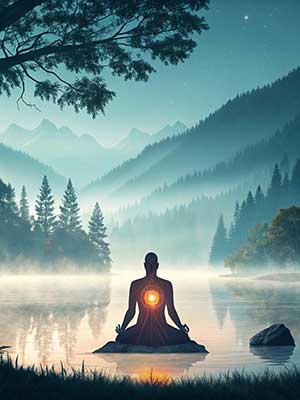
And they usually know best what is good for us and which direction we should take in our lives.
Many artists, writers, composers and painters regularly found and still find the inspiration for their works in nature.
From Ludwig van Beethoven It is known, for example, that he regularly took long walks in nature, always carrying a small notebook with him.
As soon as an idea for a melody or a new piece came to his mind, he wrote it down in his notebook to continue working on later.
I'm not Beethoven, but I often have the best ideas when I'm out and about in the forest with my dog Jacky.
In nature, we have access to the source of wisdom within ourselves. And that can be something very valuable - especially in a time of upheaval like the one we are currently experiencing.
2) Strengthen intuition
The "inner guru", this inner wisdom within us, is not only the source of inspiration, but also the seat of our intuition.
Intuition is our "gut feeling". The knowledge of what is good (or bad) for us, without being able to rationally justify it.
Those who have good intuition instinctively know what to do in a situation.
He has a sense of the direction in which things could develop and is prepared. And can thus deal better with challenges.
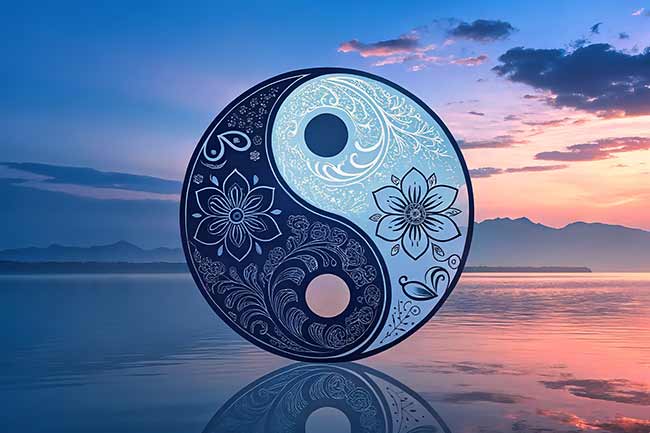
In Taoism - one of the great wisdom teachings from China - one would say that our intuition allows us to follow the "natural flow of life".
Good intuition has many prerequisites. One of them is that we perceive the messages that we receive intuitively.
And that works best when we are calm and composed inside. Something we can learn in and from nature.
In this way, regular spending time in nature also strengthens our intuition and enables us to act with foresight and effectiveness.
3) Living more resiliently
Resilience is the ability to deal with challenges and to swing back to one's center after a (physical or psychological) stress.
However, we can only swing back to our center if we have already been in our (inner) center before a stressful situation.
But what does "inner center" actually mean?
In the already mentioned Taoism, the inner center means a state of balance and harmony within oneself.
This state is achieved through the balance of the opposing forces of Yin and Yang and through a life in harmony with the Tao - the natural flow of life.
And we feel it particularly impressively in nature.
That's why we find our way back to our inner center in nature almost by itself. And then, after a stressful situation, we can swing back to our inner center.
Those who regularly treat themselves to a break in nature are therefore more resilient to stress and strain and can deal better with challenges.
4) Health prophylaxis
However, resilience does not only refer to the psychological and mental side of our actions.
Good physical health can also be an important pillar for a resilient approach to problems.
And here, too, nature has a lot of gifts in store for us.
I have already spoken in several places about the many positive effects, for example of the Forest bathing on the physical (and also mental!) health.
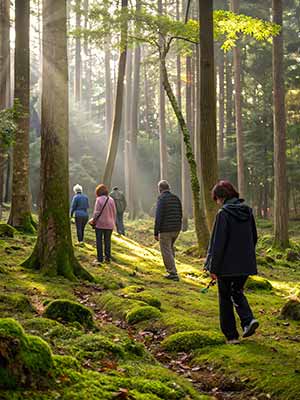
So here is just a brief:
A whole series of studies has now proven that regular stays in the forest can lower blood pressure, reduce the concentration of the stress hormone cortisol, and stimulate the immune system - to name just a few of the benefits.
Less well studied are the effects of other natural areas such as mountain regions or coastal landscapes on health. But here, too, there are promising studies that suggest a positive effect on health.
Here you will find the already mentioned list with a selection of studies on the topic of forest bathing and the effects of nature on our health and well-being.
5) Strengthen self-confidence
When I was 10 or 12 years old, I once did a test of courage with which I wanted to strengthen my self-confidence:
I set my alarm clock for 1 a.m., then rode my bike to a forest outside the village where I lived and then walked through the deep black forest for an hour.
I had a flashlight with me, but I had decided to turn it on only when I couldn't see the way anymore.
And I stuck to that.
That was a drastic experience from which I still draw strength today.
To develop more self-confidence, however, you don't have to go into the forest at night.
Because what does "self-awareness" actually mean?
It means that I am aware of myself. That I am aware of the skills and competencies I have.
When I am self-confident in a situation, I know exactly "what I'm capable of".
Self-confidence therefore also develops when I learn more about myself.
And as already mentioned, this works particularly well in nature, because we are not distracted by all the things of our modern civilization.
6) Authenticity
The glittering world of advertising and fashion makes us believe that we have to be perfect in order to be successful and desirable.
We let ourselves be infected by this and do everything to "look as good as possible" and "put on a good show" externally.
Genuine authenticity is becoming increasingly rare - authenticity is therefore becoming an ever more important value in our time.
However, simply being who you are also requires a good deal of self-confidence.
Because you have to admit to yourself that you are not perfect and that that's okay.
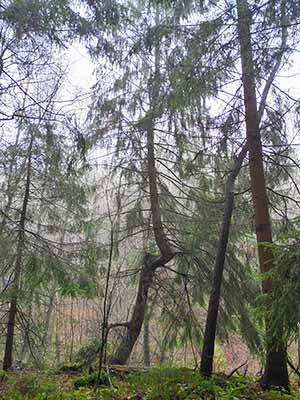
And nature also helps with this by showing us that not everything has to be perfect.
"One does not walk into the forest and accuse the trees of being off-centered, nor do they visit the shore and call the waves imperfect. So why do we look at ourselves this way?" - Unknown author
In German:
"One does not walk into the forest and accuse the trees of being off-centered, nor does one visit the shore and call the waves imperfect. So why do we look at ourselves this way?"
I think the quote expresses very nicely what it's all about if you want to live more authentically.
Namely, about accepting yourself in your imperfection and not pretending to be perfect.
Nature teaches us this with every step we take outdoors - and at the same time strengthens our self-confidence, so that we can also show this externally.
Result
In a fast, complex and upheaval world as we are currently experiencing, nature offers valuable help and a place to regenerate and replenish one's strength.
At the same time, nature helps to discover one's own inner nature and thus maintain serenity and clarity.
(External) nature plays an important role in this, because in nature we recognize ourselves. Nature holds up a mirror to us, so to speak, and ensures that we rediscover our inner balance connected to ourselves.
This can lead us into a State of Flow in which we intuitively feel what is good for us and what is not. In this way, nature helps us to become clear about our own values and helps us to live more authentically.
In contact with our own inner nature, we also find more self-confidence and a more positive self-esteem. We become aware of our abilities and resources, which helps us to deal with stress and challenges in a more resilient way.
The inner connection to ourselves, which we can build and deepen in and with nature, is therefore an important key to personal growth and well-being and allows us to remain calm and centered even in the current difficult times.