
Welcome to the second part of the article series "Where do we go to nature here?".
A quick reminder:
In Part One was about why it is a good idea to preserve landscape spaces that are as natural as possible. Why wilderness and "real" nature are not only not superfluous, but even essential for us humans.
Unfortunately, we have left very little (if any) of it here in Germany.
Therefore, Part 2 and Part 3 will be about whether and how we can still manage to encounter nature on a deeper level and build a real connection to nature - with all the positive effects that such a connection can have on us and our lives.
In the second part, which you are reading right now, I would like to introduce you to some ways in which you can find more nature in your area, even if you live in an urban environment (or like me, in a very agricultural environment).
The third and last part will then be about less tangible possibilities for more nature and closeness to nature – meditations, coaching techniques or more shamanic approaches are among them. But you can also find the use of technical aids and suggestions for activities in nature in the last part of the article series.
But now let's see where and how you can bring more nature into your life in a concrete and tangible way.
No nature in Germany?
Many, many years ago, I once saw an interview with the late Sun Bear, a Sioux native from the USA who made the medicine wheel famous in the Western world.
In the interview, Sun Bear spoke of Germany as a country that is "industrialized to the teeth".
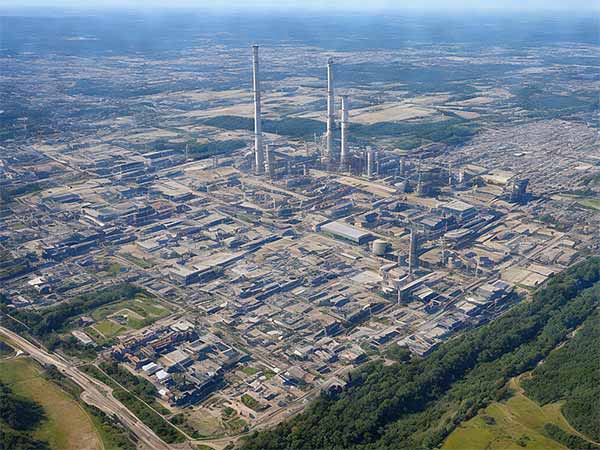
In a highly industrialized country like Germany, there is often little space for nature
The high population density combined with the extent of industry that exists in Germany as currently (at the beginning of 2024) the third largest economy in the world, has unfortunately left hardly any room for real nature.
This is also the conclusion of this short but worth reading article in the Frankfurter Rundschau.
No wonder that nature has become a scarce commodity in our country.
But Germany is very densely forested, isn't it?
Of course, we have a lot of forest in Germany – about a third of the country's area consists of forest. This makes Germany the most densely forested country in Central Europe – measured by the numbers.
However, this is almost exclusively forestry forest, which is used more or less intensively for forestry.
And which often has little in common with a natural forest.
It is not without reason that the foresters talk about "harvesting wood". And biologists like to refer to such forest forests somewhat disparagingly as "timber fields".
Such monocultures have a considerably lower species richness than their natural relatives. They are more susceptible to pests, such as the bark beetle – which, by the way, only appear as pests because they find an unnaturally richly laid table in the monocultures, which are usually atypical of the location.
Natural ecosystems usually have a higher variability of different tree species and if one species predominates, such as in the taiga with its conifer stands, then they are well adapted to the local conditions and therefore more resilient than their conifers in the monocultures.
When you enter a natural forest, you immediately feel the difference to the forests used for forestry here in Germany. In a "real" forest, there is a completely different energy than in its forestry counterpart.
Forests used for forestry also have many positive effects on body, mind and soul. But there is a completely different atmosphere in natural and semi-natural forests than in their managed counterparts.
Anyone who has ever been to a country where there is still "real" wilderness and pristine nature knows what I'm talking about. Most of the time, visits to such areas leave us with a deep sense of awe. And of course, this also applies to natural (or at least very near-natural) forests.
So is it better not to even try to reconnect with nature in Germany and make nature a source of wisdom and spirituality in one's own life?
Or are there ways in which you can deepen your contact with nature here in Germany and thus live more inspired, relaxed and with more flow?
Yes, there is!
National Geographic has even recently an article in which the magazine "Five nature conservation projects (presents) that give hope" (the title of the article).
How to make nature your friend – also in Germany
I had already given you some possibilities for this in in this article , which was about how you can bring more nature into your life when you live in the city.
And of course, you can do all these things in general to compensate for the lack of wilderness in Germany and the associated alienation from nature to a certain extent.
But there's more you can do.
Germany's National Parks – Glimmers of Hope for People and Nature
Since the founding of the Yellowstone National Parks – the first national park in the world – in 1872, the main task of national parks is to permanently protect particularly valuable areas from human influence.
How important such national parks are, especially here in Germany, I learned after my biology studies in 2000 during a six-month internship in Harz National Park seen.
Unfortunately, such national parks are only worth 0.6% of our land area in Germany (source: Federal Agency for Nature Conservation ), but still.
National parks are also an opportunity to get to know relatively natural landscapes here in Germany and thus build a deeper connection with nature.
Resistance to national parks – understandable?
The purpose of the national parks is not only to protect nature, but also to make it tangible for people.
This is often forgotten when it comes to the establishment of a new national park in Germany (as was recently the case in the planned Spessart National Park, which was rejected by large parts of the population).
Precisely because we have very few real natural areas left in Germany, many people are drawn to the national parks.
This promotes tourism in the respective region.
In combination with the opportunities that a national park offers for public relations, the establishment of a national park is almost tantamount to an economic development program for the region.
So it's actually a win-win situation.
When I did my internship in the Harz Mountains, the national park there was still relatively new. And large parts of the population had great reservations about the national park.
In the meantime, that has changed.
The residents of the national park communities have recognized that the flagship "national park" not only entails restrictions, but also ensures that many guests come to experience nature.
At the same time, nature is protected, as each national park has an active visitor management system, so that core zones of the national park are available as retreats for animals and visitors can still experience nature to an extent that is difficult to do elsewhere in Germany.
National parks in Germany – an overview
In case you have now acquired a taste for it and want to spend your next vacation in a national park in Germany, I have compiled all the national parks for you here.
By the way:
All national parks offer an extensive programme of activities in many different areas - also and especially when it comes to experiencing nature!
You are sure to find an offer that suits you.
There are a total of 16 national parks in Germany (as of early 2024). Here is the overview (sorted by year of origin):
Germany's national parks at a glance (expand)
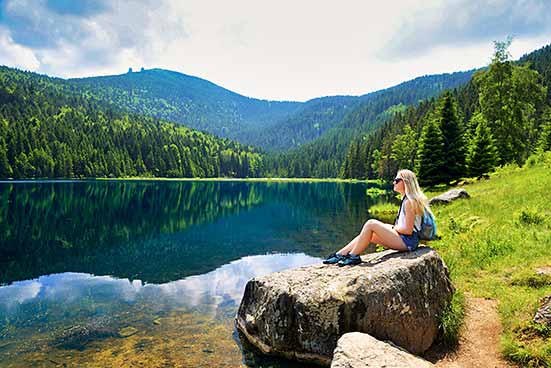
The Bavarian Forest National Park is Germany's oldest national park. It is characterized by its extensive forests with rich biodiversity. With over 300 kilometers of marked hiking trails, it offers visitors the opportunity to explore and experience untouched nature.
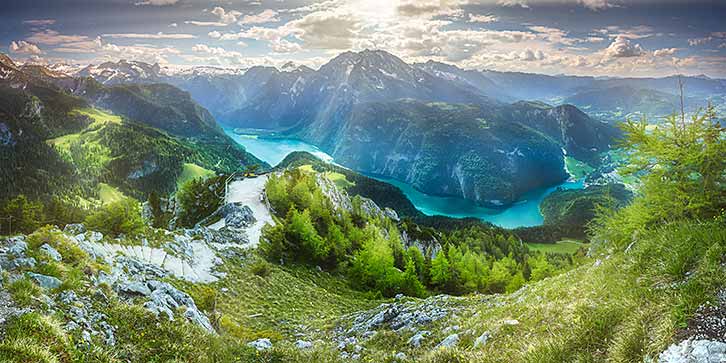
Berchtesgaden National Park in Germany boasts a breathtakingly beautiful alpine landscape characterized by rugged mountain peaks, sparkling lakes (most notably Lake Königssee), and lush forests. It provides shelter for a variety of rare animal and plant species, including golden eagles and alpine roses. With numerous hiking and climbing routes, the park offers incentives for adventurers, recreation seekers and nature lovers alike.
Schleswig-Holstein Wadden Sea National Park
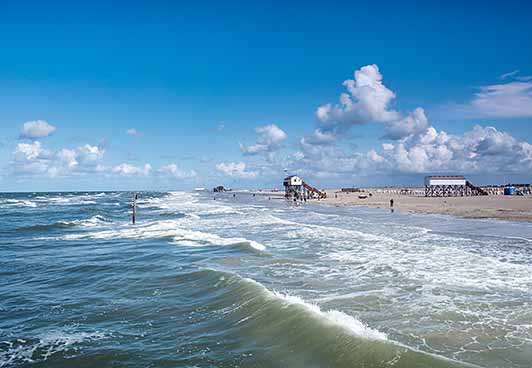
The Schleswig-Holstein Wadden Sea National Park in Germany is not only Germany's largest national park, but also a UNESCO World Heritage Site and, together with the Lower Saxony and Hamburg Wadden Seas, forms the largest Wadden Sea system in the world. Its unique landscape is shaped by tides and provides habitat for millions of migratory birds as well as a large number of mudflats. With its extensive tidal flats, salt marshes and islands, the national park is an important ecosystem and a paradise for nature lovers and bird lovers.
Lower Saxony Wadden Sea National Park
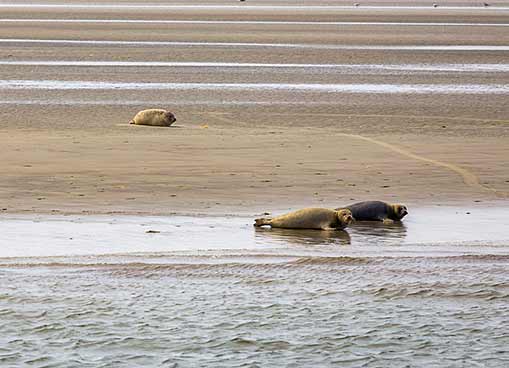
The Lower Saxony Wadden Sea National Park is also part of the UNESCO World Heritage Site. As one of the most important wetlands in the world, it provides an unparalleled habitat for millions of migratory birds during their migrations. With its unique tidal conditions and diverse flora and fauna, the Lower Saxony Wadden Sea National Park is an outstanding example of natural diversity along the German coast.
Hamburg Wadden Sea National Park
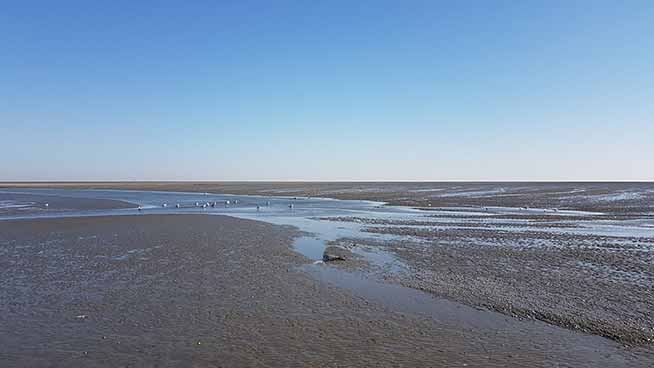
As the third in the group, the Hamburg Wadden Sea National Park is also part of the UNESCO World Heritage Site and is characterized by its unique tidal ecosystem. The national park provides habitat for a variety of wading birds, seals and other coastal inhabitants and is an important resting place for migratory birds on their migrations. With its tidal flats, salt marshes and tidal creeks, the national park is a fascinating natural area that offers visitors the opportunity to experience the dynamism and beauty of the Wadden Sea.
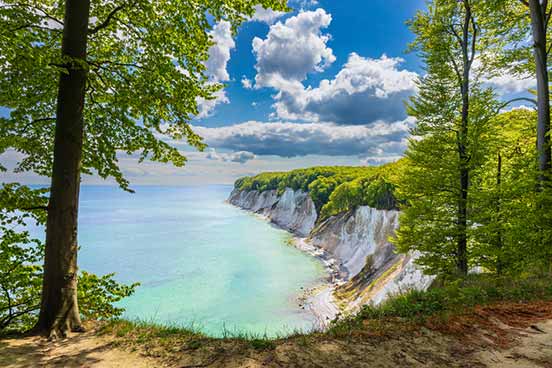
The smallest national park in Germany, the Jasmund National Park on the island of Rügen, is home to the largest beech forests on the Baltic Sea coast and is rightly a UNESCO World Heritage Site. In addition, the Jasmund National Park is known for its striking chalk cliffs, which are among the highest in Europe. The spectacular cliffs rise steeply from the Baltic Sea and offer breathtaking views over the sea and the surrounding landscape. The national park is home to many animal and plant species, including such rare species as lady's slipper and various species of orchids or white-tailed eagles, which breed on the coast of the national park.
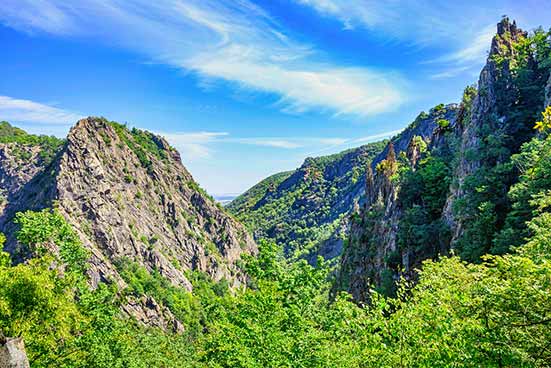
The drought of the last few years (especially in 2022 and 2023) and the resulting bark beetle infestation have taken a heavy toll on the Harz National Park, where I was allowed to work for 6 months in 2000. Its dense forests have so far consisted mainly of the spruce trees, which were actually foreign to the site, which had been planted as fast-growing trees throughout the Harz Mountains during the mining period. Visitors now have the opportunity to experience the emergence of a new, natural ecosystem up close. However, the unique mixture of dense forests, wild rivers and rugged rock formations for which the Harz Mountains are actually known can still be experienced in many places. The Harz National Park offers habitat for a variety of animal and plant species, some of which are rare, such as lynx and black stork.
Saxon Switzerland National Park
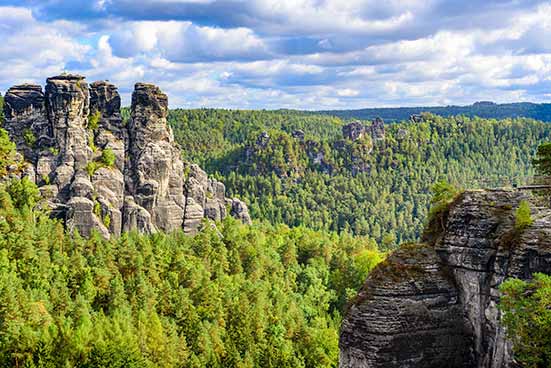
The Saxon Switzerland National Park is not only one of the smallest national parks in Germany, it is also home to one of the most spectacular natural wonders in Germany, the Bastion. As the only non-alpine rock national park in Germany, it impresses with its bizarre rock formations and deep gorges that attract hikers and climbers from all over the world. The park and its surroundings offer over 1,100 climbing peaks and numerous well-marked hiking trails through a varied, sometimes spectacular landscape.
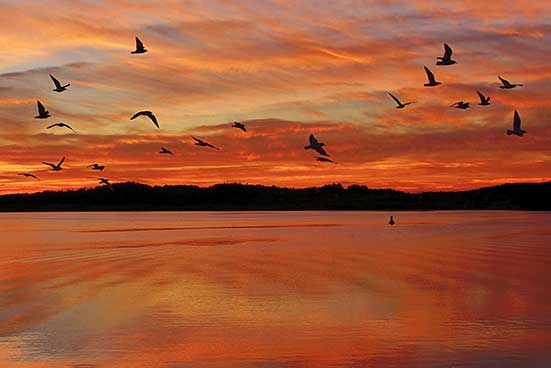
The Müritz National Park in Germany is a must-see for all water lovers. More than 100 lakes with an area of more than 10,000 square metres offer extensive beech forests and species-rich wetlands and a wide range of opportunities to experience nature up close. The national park is an important retreat for endangered species such as the white-tailed eagle. With over 300 square kilometres, it is also the largest land national park in Germany and offers numerous hiking and cycling trails to explore the untouched nature.
Western Pomerania Lagoon Landscape National Park
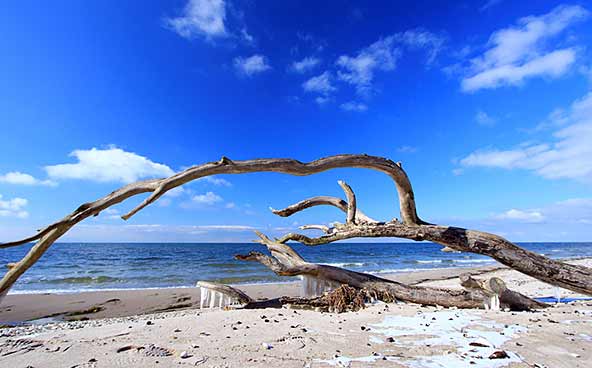
The Vorpommersche Boddenlandschaft National Park rightly advertises with the slogan "Wilderness by the Sea". The third largest national park in Germany is a unique coastal ecosystem with its coastal lagoons (the Bodden), whose shallow lagoons provide important resting places for migratory birds and are home to a variety of waterfowl. These include such impressive species as white-tailed eagles and cranes. With its picturesque landscapes and maritime habitat, the national park offers visitors the opportunity to experience and enjoy the natural beauty and diversity of the Baltic Sea coast to the fullest.
Lower Oder Valley National Park
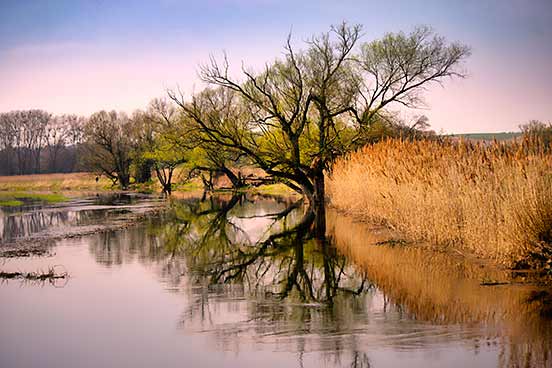
If you want to experience the beauty and majesty of a (at least partially) natural river landscape with extensive floodplains and untouched nature, Germany's only floodplain national park is the right place for you. The Lower Oder Valley National Park stretches along the Oder and, with its floodplain landscape, offers the basis for an extraordinary biodiversity. 145 different bird species breed in the national park, plus 40 different fish species and the beaver is also at home in the national park.
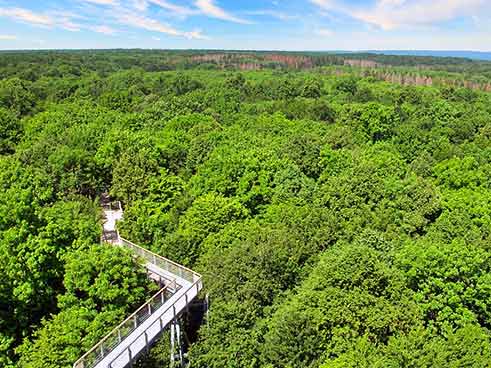
The Hainich National Park is known for its impressive beech forests, which are part of the UNESCO World Heritage Site and offer a unique natural diversity. As one of the largest contiguous deciduous forest areas in Germany, the park is home to rare animal species such as black woodpecker and wildcat and provides habitat for 15 different species of bats. A well-developed network of trails with hiking trails and nature discovery trails allows visitors to get an impression of what primeval forests in Central Europe might have once looked like.
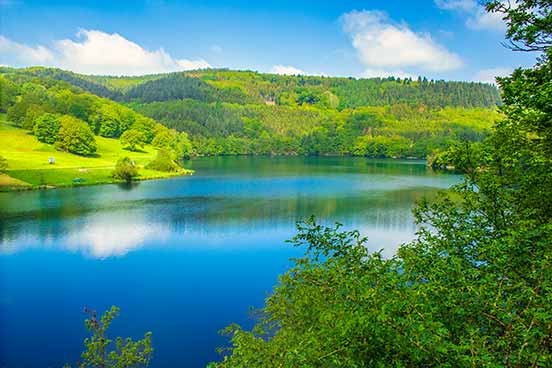
The Eifel National Park in Germany is characterized by a unique mixture of extensive mixed beech forests, lakes and wide, open grasslands (the Dreiborn Plateau). It thus offers a retreat for thousands of animal and plant species, including eagle owls, black storks and wildcats. It is one of the younger national parks in Germany, but already allows visitors to experience the feeling of wilderness and untouched nature.
Kellerwald-Edersee National Park
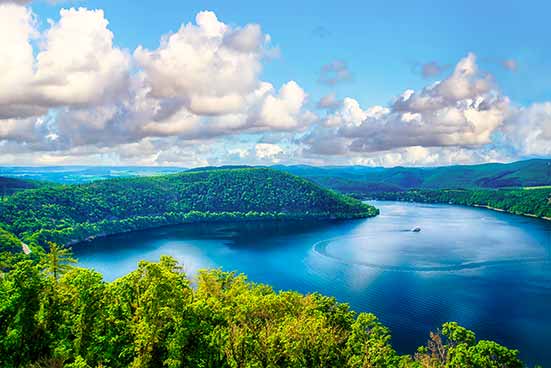
The Kellerwald-Edersee National Park, which celebrates its 20th anniversary in 2024 together with the Eifel National Park and the Black Forest National Park, is characterized by extensive beech forests, which have been designated as a UNESCO World Heritage Site and form one of the largest closed beech forest areas in Germany. Due to their hillside location, many parts of these forests are largely untouched and provide habitat for a variety of rare animal species such as black stork and wildcat. In the national park, visitors to the National Park have the opportunity to experience impressive nature experiences in a wonderful natural landscape.
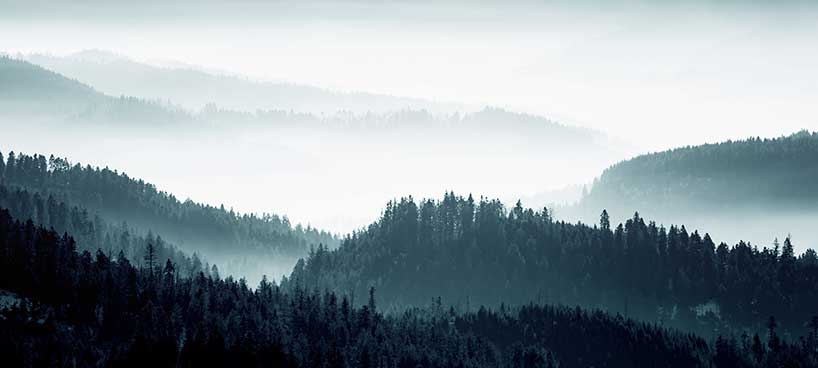
The Black Forest National Park, which was only founded in 2014, advertises with the slogan "A touch wilder" - and rightly so, because with its old forests, moors, cirque lakes (of which there are three in the national park area), waterfalls and imposing rock formations, the national park impresses with its diverse landscape. With an area of only about 10,000 hectares, it is one of the smaller national parks in Germany, but still offers habitat for rare animal species such as capercaillie, black stork and (currently still sporadically) wildcats and lynxes. A well-developed network of paths with various themed trails make the national park area an experience for nature lovers.
Hunsrück-Hochwald National Park
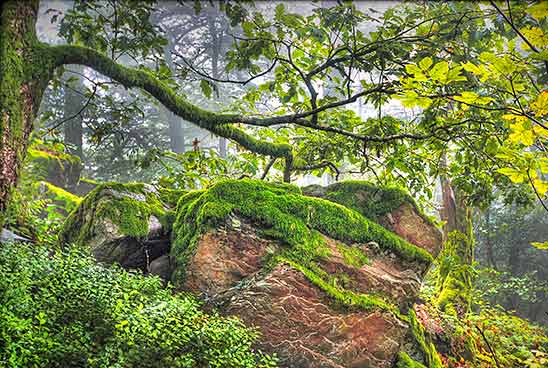
The Hunsrück-Hochwald National Park is the youngest national park in Germany. With its extensive forest areas, which extend over the high altitudes of the Hunsrück, it clearly stands out from the surrounding wine-growing regions. On an area of approx. 10,000 hectares, the national park offers refuge for many plants and animals and represents a "biological hotspot" in the region. Exhibitions, adventure tours and a daily programme of events offer – as in all national parks – many opportunities to get to know the nature of the national park. For nature lovers who prefer to explore the national park on their own, there is a national park app that makes it easier to plan your own tours with many tips and inspiration.
You can also find a complete overview of all national parks in Germany sorted by federal state on the website of the Umbrella Association of German National Parks, Biosphere Reserves and Wilderness Areas (however, the interactive map on the website of the umbrella organisation also makes it clear how tiny the area of national parks in Germany actually is).
Even though national parks may not have the status and originality of our country as in other countries, they are still a wonderful opportunity to come into contact with (somewhat) uninfluenced nature and to deepen the connection with nature.
Nature reserves & semi-natural forests and natural areas
The same applies to other protected areas, of course. Because in addition to the national parks, there are other protection categories in Germany.
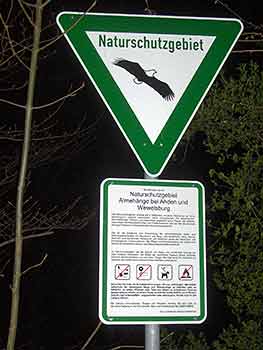
These include biosphere reserves, landscape conservation areas, nature parks, nature reserves and the so-called Natura 2000 areas.
What they all have in common is that nature in these areas is particularly protected and can develop more freely than is the case elsewhere.
And that's why these areas are also a good way to bring more nature into your life and experience nature in a more intense way than in the city park on your doorstep.
But:
The fact that these areas are specially protected also means, of course, that there must be special regulations for entering these areas. Otherwise, the protection would quickly be gone.
So be sure to familiarize yourself with the local regulations before entering such a protected area.
The general provisions that apply almost everywhere (and should be normal for common sense alone) include:
- The Way Commandment (you should/must stay on the paths)
- Do not pluck, tear or cut off plant parts
- Don't leave any rubbish lying around
- Behave appropriately (no loud music, no loud shouting, etc.)
- Keep dogs on a leash if necessary
If you stick to this, you can have wonderful nature experiences in these specially protected areas and further deepen your connection with nature.
For North Rhine-Westphalia I recently here is an overview over some beautiful nature parks. If you can speak from NRW, this might be something for you.
Often there are also relatively natural areas that do not have the character of a protected area.
Be it that a piece of forest in private hands is more or less left to its own devices or be it that a former field has been fallow for years and is no longer cultivated because the associated farm no longer operates.
You can also have wonderful nature experiences there. This is because nature usually reconquers such areas relatively quickly.
Parks and Tiny Forests
It does not always have to be untouched, wild nature that brings us into contact with nature – although it is generally true that original experiences of nature have a particularly intense effect on us.
Sometimes it's enough to bring at least a little more nature into your life than you normally do.
A good way to do this: city parks and tiny forests.
In actually every city there are one or more such parks. And there you can also have profound experiences of nature.
It is often the case that there are particularly old and impressive trees in such parks – after all, there is no forestry in these parks. Take a look around your nearest park to see what nature there is to discover.
And even if there are no "special" trees there (after all, every tree is something special), you can have many other nature experiences in city parks.
There are plenty of birds to discover, foxes roam the grounds as cultural followers at dusk, squirrels and sleepers live in the trees, there are butterflies, bees and other insects that sit on the blossoms of the many flowers in such city parks.
All of these are wonderful ways to enjoy the nature around you and feel connected to nature.
There are often fountains or even small ponds in such parks. Water is an important element in nature and simply putting your feet in the water can help you feel connected to the earth and nature.
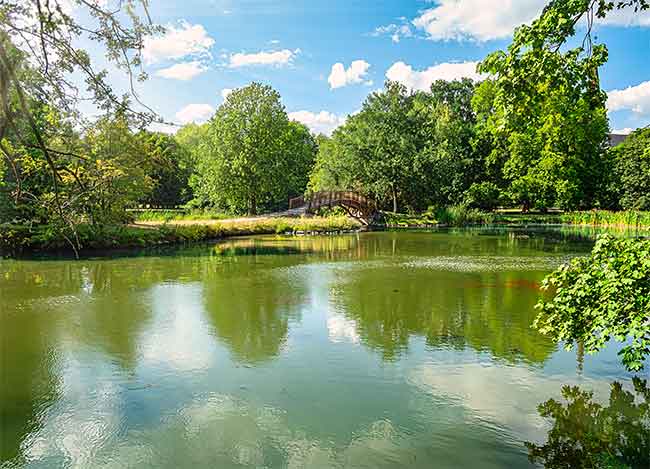
Nature in the city: Pond in Clara Zetkin Park in Leipzig
Or you can just walk barefoot across the green spaces (although of course you should pay attention to where you step). This also connects you - in the truest sense of the word - with the earth and you even do something for your health.
This is because walking barefoot ensures a charge balance between you and the earth's surface, which has been proven to have positive effects on health (keyword "earthing", here is a link to a Study to this).
Fortunately, politicians have now also recognized how important nature is, especially in the city. National Geographic recently reported in this published article of a number of regional projects, all of which pursue the goal of bringing more nature into the city.
Bringing nature into the city is also the goal of the Tiny Forest movement, which is finding more and more followers in Germany. Tiny Forests are intended to make the atmosphere of the forest tangible for people in the city.
Such tiny forests also play an important role in air quality and the microclimate in our cities. In times of climate change, it is becoming increasingly important to establish active temperature management in cities and Tiny Forests are an important building block for this.
By the way, the Tiny Forest concept was thought up by the Japanese Akira Miyawaki. It seems to be the special relationship of Japan and the Japanese to the forest that paves the way for such ideas, because the Forest bathing , which is also becoming increasingly popular in Germany, originally comes from Japan.
If you want to learn more about the Tiny Forest movement in Germany, be sure to check out the website of the MIYA forest e.V. who wants to further advance the Tiny Forest idea in Germany.
Botanical Gardens
We don't usually associate gardens with pristine nature and wilderness. Quite the opposite: we see gardens more as cultivated nature, demarcated from the "wild nature" outside of it.
Even the word "garden" expresses this. This is because it comes from the Germanic "gher", still in use today as a whip, which referred to willow rods (willow rods, the young, flexible branches of willows) and whips of other trees, which were used to separate the cultivated area in front of a farmstead from the surrounding nature.
So the garden is the cultural space demarcated from nature.
However, this does not apply to all gardens. Especially botanical gardens, of which there are in Germany over 100 often do not (only) have the goal of showing cultivated plants.
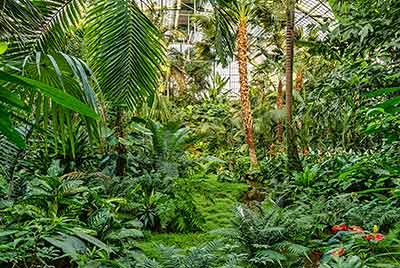
Instead, many botanical gardens try to recreate habitats. For example, there is often an alpine area where plants of the high mountains can be seen. Or there are greenhouses with plants from the tropical forest. Many botanical gardens also show desert regions with the associated plants.
In Bochum Botanical Garden there is a walkable jungle pond from the Tertiary period, which Botanical Gardens in Bielefeld shows a heath landscape and a number of botanical gardens even have attached Japanese gardens, which we have already talked about.
For example, a well-designed botanical garden can actually give you the feeling of actually being in a region depicted in this way – and thus represents another opportunity to feel more connected to nature again.
Japanese gardens and indoor bonsai
Another Japanese idea to build a deeper connection with nature are Japanese gardens (Zen gardens) and also bonsai. Because both have the goal of recreating the "wild, untouched nature" and thus making it tangible on a more subtle level.
Japanese Gardens (Zen Gardens)
Traditional Japanese gardens (Zen gardens) exude an immense calm. When you come to such a garden, you almost can't help but leave all your stress and tension right at the entrance.
This is not entirely coincidental, as Japanese gardens follow certain principles to create a peaceful and natural atmosphere.
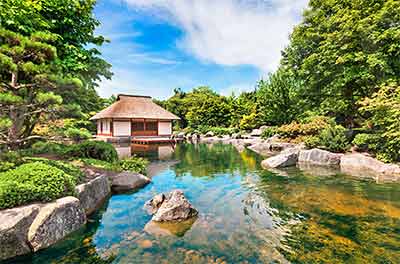
In such a garden, many important natural elements can be found symbolically: stone, moss, water and trees.
In a Japanese garden, stones often stand for animals or, of course, for mountains. As gravel raked in wave form, they often also stand for the oceans. Just like the water, which also represents the sea or the rivers.
Moss stands for age, because moss takes a relatively long time to grow. The trees in a Japanese garden often represent life as a whole (source: Wikipedia ).
The interplay of all these elements ensures that a very special atmosphere is created in such a Japanese garden, which often makes us feel a deep connection to nature and the natural elements.
Even though a Japanese garden is probably not an enrichment from an ecological point of view, it speaks to a deeply spiritual level in us.
And: In many cities in Germany there are such Japanese gardens or Zen gardens. Among them, for example, in Augsburg, Berlin, Bielefeld, Bonn, Hanover, Trier, Wolfsburg and many others.
Bonsai
Bonsai – literally translated simply as "potted plant" – are small trees grown in bowls that are artfully designed so that they look like their large role models in the forest in appearance and shape.
Many people say that the constricted cultivation of a tree in a bowl, the bending of the trunk in shape and the pruning of the leaves are a violation of the nature of the tree.
Although I can understand this argumentation, bonsai have always fascinated me. Especially since I was and am a fan of the original Karate Kid film trilogy. Because there the wise caretaker and karate master Mr. Myagi devotedly cultivates his bonsai in his free time.
And: Far fewer people have a problem with the ficus tree in the living room, although the ficus is also a tree species and the popular living room plant is actually a bonsai - even if it is not used as such.
In Japan, where the art of bonsai design, which actually originated in China, has been further developed, growing a bonsai tree stands for respect for nature. Particularly valuable bonsai can reach an age of several hundred years and are passed on from generation to generation.
But what fascinates me most about bonsai is that they somehow manage to transport the energy and the feeling of wild, unspoilt nature and make it tangible at home.
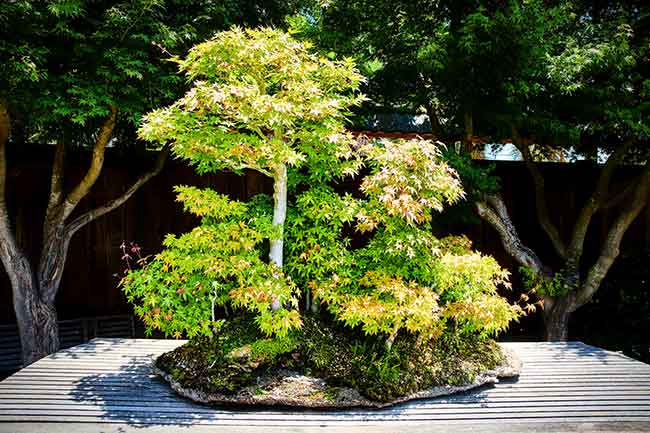
Bonsai are available as individual trees or, as here, in the form of a small grove
That's why bonsai is another way to deepen your connection with nature, even if you don't have access to wilderness and truly unspoilt nature.
However, the mass bonsai from the hardware store neither do justice to the aspect of respect for nature, nor do they transport the spirit of nature into your own four walls.
Caring for and designing a bonsai is a task that requires perseverance and dedication and also requires a lot of knowledge about the requirements of the plants.
This means that bonsai are certainly not suitable for everyone to build more connection with nature. But who knows, maybe growing a "real" bonsai is just the right way for you to get in touch with the "Spirit of Nature".
Another reading tip: If you want to learn more about bonsai, then take a look at this interview with bonsai expert Heike van Gunst (editor-in-chief of the magazine Bonsai Art) on Zeit.de. There even the aforementioned Karate Kid films are discussed!
Balconies, gardens, home farming
Many rental apartments have a balcony, some apartment buildings have a small communal garden in front of or behind the house. In the countryside, almost every house has its own garden – all possibilities to bring more nature into your life. Not wild, unspoilt nature, but just more Nature.
And you know, in case of doubt, one is always greater than zero 😀.
Garden happiness
If you are lucky enough to have your own garden or have an allotment or community garden, this is of course also a great way to get in touch with nature.
I probably don't need to tell you that if you're a garden owner.
As Germaine Baroness von Stael put it: "The splendour of gardens always requires a love of nature."
But did you know that such a garden is also a real paradise can be for nature and biodiversity? The " Thousands of gardens – thousands of species " has recognized this and wants to contribute to balconies, gardens and company premises becoming important places for biodiversity.
Maybe this is something for you too?
Balconies
But even if you are not in the fortunate situation of having your own garden, but "only" have a balcony in your apartment, you have a wonderful opportunity for more nature in your life.
Balcony expert Birgit Schattling has a lot of tips on her Website , there are books by her and even online courses for anyone who wants to get started with balcony gardening!
However, a balcony designed in a natural way is not only a great "local recreation area" and retreat. It can become an important survival space for many animals in the city and is thus at the same time an aid for more biodiversity.
And you can even grow your own vegetables on the balcony. Birgit Schattling also has many tips and ideas for this on her website.
And that leads me straight to the next point: home farming.
Home farming and self-sufficiency gardens
As a child, like all our neighbors, we had a vegetable patch in our garden. There were potatoes, carrots, various types of cabbage and delicious strawberries.
The supermarket behind the house, so to speak.
What was completely commonplace back in the 1970s is now returning under a new name: home farming.

The first time I consciously came across the term was when I saw a report about the (now former) Tagesschau anchor Judith Rakers.
She has realized a dream near Hamburg and bought an old farm. There she grows her own vegetables, keeps chickens and also runs a farm own online shop with products around home farming.
Judith Rakers has made the term home farming popular in Germany. So popular that you'd better search for "self-catering" on Google if you're looking for information on the subject.
Whether you call it home farming or self-sufficient gardening, it doesn't really matter.
It doesn't matter that you don't necessarily need your own garden for home farming. You can also do home farming on your balcony (see above). And you can even grow many plants in the apartment (check out this article ).
Many cities also have urban gardening – or urban home farming – projects that you can get involved in. This is also a wonderful way to get more in touch with nature in the city.
You can find a great overview of such projects here .
Open Gardens Actions
In many cities and municipalities, there are also so-called "open gardens" campaigns once a year. Private garden owners open their garden to the public one day a year.
The gardens that you can visit on these days are really worth seeing.
There are all kinds of gardens: classic gardens, landscape gardens, cottage gardens and many others.
And: Such a "garden day" allows you to experience a garden at least once a year, even if you don't have your own garden available.
You will learn a lot about gardening, meet new people and you will come into more contact with nature in this way.
Not with pristine and untouched nature, but in case of doubt, a little nature is always better than no nature at all.
Unfortunately, there is no "overview page" for such Open Gardens campaigns. My tip: If you want to find out when and where such an action takes place in your area, just ask Google for "open garden" + your place of residence.
You're sure to find what you're looking for!
Zoos and Zoos
Zoos and zoos are very controversial, but I still don't want to leave them unmentioned. At the same time, however, I would like to point out that it is best for you to get an idea of how you feel about zoos and zoos.
Because Animal rights activist rightly point out that many zoos still cover their "needs" for animals through wild-caught animals and that very few animals are actually released into the wild as part of the zoos' often cited species conservation programmes.
In addition, the improved animal husbandry of modern zoos with enlarged and elaborately designed enclosures is no substitute for a "life in the wild".
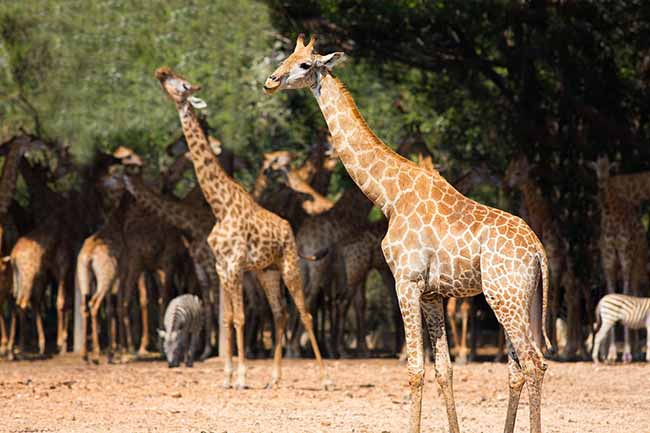
Zoos and zoos are controversial, even if the enclosures are often better today than they used to be
You can also ask yourself whether it doesn't make more sense to get to know the local wildlife first before you deal with the animals from far away countries.
On the other hand, there are examples of animal species that would have become extinct if some specimens had not survived in zoos and could have been bred by means of the species conservation programmes already mentioned – including the European bison , the counterpart to the American bison (which, by the way, also has its Survival herds kept in captivity).
And also the first in the Harz National Park again lynxes come from enclosure farms. Today, more than 100 animals live in the national park (as of 2023), which make up half of the total population of lynxes in Germany.
And:
Contact with animals in zoos and zoos is also a way to build more connection to nature - and that is something that our time urgently needs.
However, this is not possible if you hurry from enclosure to enclosure – as many visitors to the zoo do – eat fries on the side and, best of all, knock on the windows of the enclosures or – even worse – make faces at the monkey house.
To build real connection with animals, you need to take your time. Sit by the enclosure for an hour or two, preferably not just once, but on different days, and watch the animals.
Keep reminding yourself that on the other side of the fence you really have to deal with individual, consciously sentient personalities . It's not just "a bear" lying on a rock – it's an individual with its own personality traits – just like you and me.
When you get in touch with the animals in this way, you can build a real bond over time.
Whether and to what extent visiting zoos and zoos is a way for you to establish more contact with nature, you ultimately have to decide for yourself, of course.
Update 18.08.24: On Web.de I recently published this extensive Article , which deals intensively with the topic.
Conclusion Part 2
In Germany, too, there are opportunities to have real, in-depth experiences of nature and to make nature an important part of one's own life.
Starting from the national parks, where you are most likely to find relatively pristine nature, we have seen various ways to bring more nature into life and to further deepen the connection to nature – with all the many positive effects that such a connection can have on us.
Part 2 was mainly about: where you can do that. In the following part 3 I will introduce you to different ways to how you can deepen your connection to nature regardless of the location.